
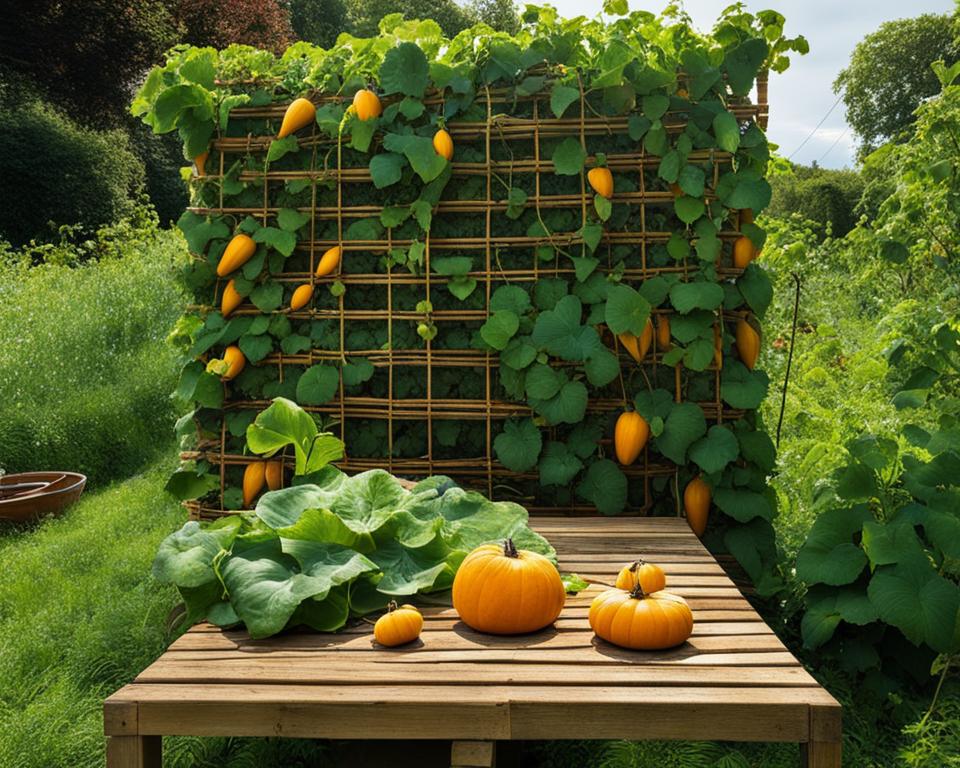
Welcome to our comprehensive guide on mastering vertical gardening with a focus on one of the most cherished garden treasures: the butternut squash. Here, we unite gardening enthusiasts with the wisdom and enchantment of optimizing space and yield through this bountiful climbing crop. As we delve into the butternut squash edition of vertical gardening, we’ll explore the ins and outs of elevating your horticultural savvy. Get ready to transform how you see and cultivate butternut squash, letting them rise above traditional limitations and flourish towards the sky.
Key Takeaways
- Understanding the fundamentals of vertical gardening for butternut squash maximizes limited gardening space and resources.
- Exploring innovative solutions that cater to urban gardening scenarios while enhancing aesthetic appeal.
- Identifying the distinctive advantages of vertical farming, from increased air circulation to exposure to sunlight, paramount for butternut squash vitality.
- Recognizing the importance of selecting appropriate squash varieties to thrive within the vertical dimension.
- Gaining insights into the best practice methods for growing, supporting, and maintaining healthy and productive butternut squash plants.
- Amplifying garden yield potential by utilizing strategic vertical gardening techniques.
Introduction to Vertical Gardening with Butternut Squash
Vertical gardening has revolutionized the way we think about cultivating plants in limited spaces. Focusing on the beloved butternut squash, this introduction to vertical gardening will highlight the transformative potential of directing your vegetables skyward. By the end of this section, you’ll grasp the essentials of setting up a vertical garden for butternut squash and how it can benefit urban gardeners or those working with cozy garden plots.
For those of us looking to maximize our yield in minimal areas, creating a vertical garden for butternut squash presents a savvy and efficient solution. The approach is quite straightforward—instead of letting plants sprawl across precious ground space, we encourage them to climb upwards. This method of vertical vegetable gardening with butternut squash utilizes trellises, stakes, or other structures to save on the horizontal real estate, making it particularly alluring for city dwellers with balcony or rooftop gardens.
Let’s shed some light on the preparations pivotal to beginning your vertical green adventure:
- **Choosing the right spot**: It should provide ample sunlight since butternut squash thrives in warm, well-lit conditions.
- **Selecting a sturdy structure**: A well-built support is crucial to bear the weight of developing squashes.
- **Soil preparation**: Although the plants are going vertical, their roots are firmly terrestrial. Rich, well-draining soil is a fundamental pillar of success.
Note: Before you embark on this exciting project, keep in mind that patience and attentiveness to the plants’ needs will be your constant companions. Vertical vegetable gardening with butternut squash is a rewarding, albeit involving endeavor.
While the perfection of your vertical skills won’t happen overnight, considering these initial variables will lay a strong foundation for a flourishing vertical garden that transforms your gardening possibilities—both aesthetically and productively.
“Taking your garden vertical feels like defying gravity—suddenly there’s a whole new dimension to explore and cultivate.” – An Experienced Urban Gardener
With our intro to vertical gardening in hand, let’s nurture not just plants, but ambitions, as we guide your butternut squash on a journey upwards.
The Benefits of Growing Butternut Squash Vertically
When we ponder the path to a bountiful butternut squash harvest, vertical gardening often emerges as a sterling solution. The benefits of growing butternut squash vertically stretch beyond mere aesthetics; they encompass a spectrum of advantages, including an enhanced yield and improvements to overall plant health. As advocates for this upward trend, let’s examine how transforming your growing strategy can revolutionize your garden’s output and ease of care.
Maximizing Limited Space
One of the chief reasons gardeners turn skyward with their butternut squash is that upward growth inherently maximizes limited garden space. In dense urban locales or modest backyard allotments, we see vertical gardening ideas for butternut squash not merely as a choice but as a necessity. As our sprawling vines ascend, the ground below is freed up, making room for companion planting or diversification of crops. It’s a prime example of gardening efficiency we fully endorse.
- Small gardens: Transform a tiny plot into a vertical eden.
- Balconies: Even a balcony’s confines can yield an ample squash crop.
- Indoor setups: Introducing green life to living spaces while eyeing the harvest.
Enhancing Air Circulation and Sun Exposure
With vertical gardening, each butternut squash leaf gets its moment in the sun, underpinned by enhanced air circulation. Improved exposure to these life-sustaining elements bolsters plant vigor, leading to robust growth. We take pride in seeing our vertical gardening tips for butternut squash manifested in the health of our plants and their resistance to the common foliar diseases that often beset horizontal counterparts.
| Vertical vs. Horizontal Gardening | Yield | Plant Health | Sun Exposure | Air Circulation |
|---|---|---|---|---|
| Vertical | Higher | Improved | Maximum | Enhanced |
| Horizontal | Lower | Variable | Limited | Reduced |
As we navigate the ascension of our butternut squashes, we’re not solely fostering plants; we’re nurturing a revolution in urban and small-space gardening. Vertically-grown squash isn’t just surviving; it’s thriving, proving that in the world of gardening, the sky certainly isn’t the limit—it’s just the beginning.
“Vertical gardening is more than a trend, it’s a smart response to the spatial challenges of our time, creating gardens that grow up, not out.” – A Seasoned Vertical Gardener
Choosing the Right Variety for Your Vertical Garden
When it comes to vertical gardening, selecting the right variety of butternut squash is tantamount to your garden’s success. If you’re like us, you want a bountiful harvest from your vertical space without the heaviness of traditional squash weighing down the vines. That’s why we’re here to guide you in choosing butternut squash varieties for vertical gardens, focusing on vital characteristics such as size, weight, and growth habits. It is one of the best practices for vertical gardening butternut squash that can’t be overlooked.
The key is to opt for varieties that have a more compact growth habit and lighter fruits that won’t cause their vertical support to collapse. Not all squashes are created equal when it comes to vertical growth, so let’s explore the ones that will rise to the occasion quite literally.
“Picking the right butternut squash variety makes all the difference in a vertical garden—it’s the difference between a thriving tower of veggies and a tangled mess!”
- Butterbush: This bush variety is ideal for smaller spaces and can easily adapt to the vertical aspect of gardening. Its fruits are smaller but prolific, a perfect match for your upward aspirations.
- Honeynut: A mini version of the butternut with a deliciously sweet taste. These vines bear fruits that are easily supported by a trellis system.
- Metro PMR: Known for its disease resistance and medium-sized fruits, Metro PMR stands as a strong candidate for vertical systems.
Understanding the growth behavior of these varieties is critical in achieving a successful vertical garden. Now, we’ll take those considerations and frame them into a clear table to help you decide:
| Variety | Fruit Size | Growth Habit | Recommended For |
|---|---|---|---|
| Butterbush | Small to Medium | Compact/Bush Type | Small-scale vertical gardens |
| Honeynut | Small | Vining | Confined spaces; trellises |
| Metro PMR | Medium | Vining | Robust vertical structures |
By choosing butternut squash variety for vertical gardens wisely, you’re ensuring not only ease of management but also the overall health and productivity of your plants. Look out for these varieties, experiment with them, and watch as they transform your vertical space into a cascading garden of edible ornaments.
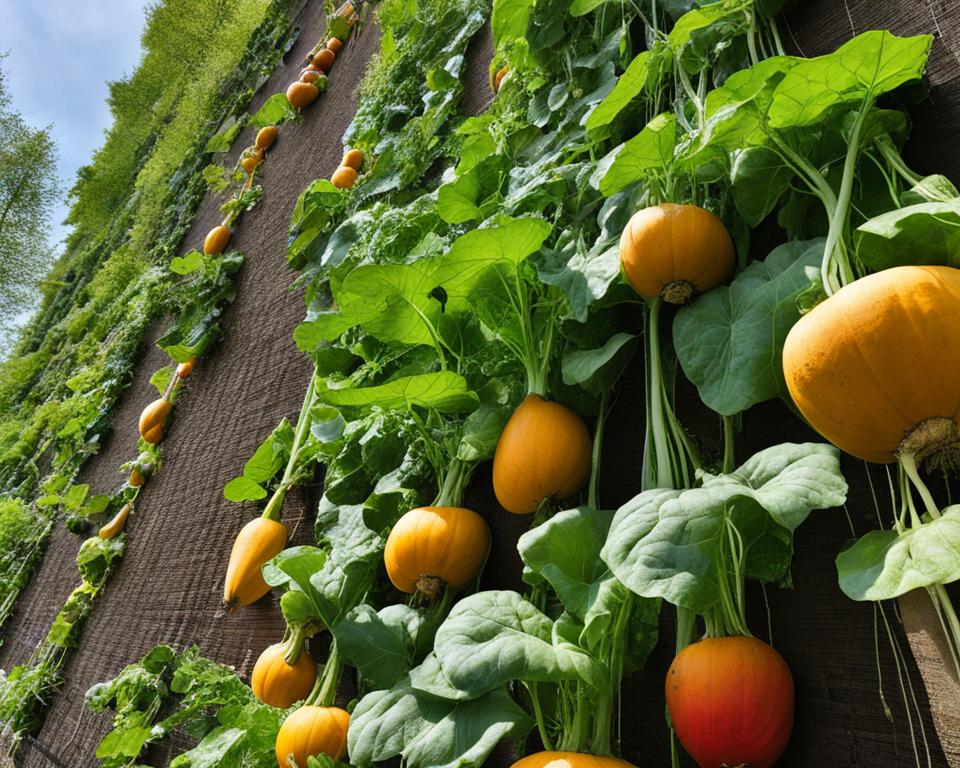
Embrace the vertical life, and soon, you will be the one sharing insights on the best practices for vertical gardening butternut squash. Happy planting, and may your gardens climb to new heights.
Designing a Butternut Squash Trellis: Materials and Methods
Embarking on the journey of how to grow butternut squash in a vertical garden is an exciting path that requires a solid foundation: a well-designed trellis. The right butternut squash trellis design is paramount, not only to support the weight of the growing squashes but also to enhance the overall health and productivity of the plants. Join us as we explore the various materials and DIY methods ideal for crafting your trellis, ensuring that your vertical garden is not only productive but also a visual treat.
Selecting Durable Materials
As we delve into trellis materials for butternut squash, it is crucial to select options that boast durability and strength. The weight of your squash as they mature means you’ll need materials that can stand up to the test—not just for one season, but year after year.
- Wood: A classic choice that brings a natural look to your garden. Cedar and redwood are preferred for their resistance to rot.
- Metal: Sturdy and long-lasting, metal trellises like those made from galvanized steel offer excellent support and can handle heavy fruits with ease.
- PVC pipes: Cost-effective and versatile, PVC can be used to create a variety of trellis shapes to suit any garden design.
- Nylon netting: It’s a lightweight option that’s surprisingly strong, perfect for growers who are looking for an easy install.
Assess your space, budget, and aesthetic preferences when deciding which materials align best with your vertical gardening goals.
DIY Trellis Design Ideas
For the creative gardeners out there, implementing DIY trellis for butternut squash not only empowers you to customize your growing space but also adds a personal touch to your garden’s aesthetic. Here are some vertical gardening DIY ideas to inspire your own trellis:
- A-Frame Trellis: This is a sturdy and easy-to-assemble design that allows plants to grow upward and the squashes to hang down naturally.
- Arched Trellis: By bending metal rods or PVC pipes, you can create an archway that looks beautiful and is incredibly functional.
- Wall-Mounted Trellis: Great for smaller spaces, a wall-mounted trellis uses vertical surfaces to your advantage.
- Grid Trellis: A simple grid can be made from wood or metal, offering plenty of spaces for vines to grip and grow.
To provide you with a clearer picture, consider the following table. Here, we outline the pros and cons of some popular trellis materials:
| Material | Pros | Cons |
|---|---|---|
| Wood | Natural aesthetics, customizable | Requires maintenance, prone to rot |
| Metal | Durable, low maintenance | Can heat up, more expensive |
| PVC | Lightweight, inexpensive | Not as strong, can look out of place |
| Nylon Netting | Easy to install, flexible | Less durable, can degrade over time |
With these insights and recommended materials, we’re confident that you can create an effective butternut squash trellis design tailored to your garden’s needs—and one that reflects your personal style. Remember, the goal is to promote upwards growth and fruiting while making the most out of the available space.
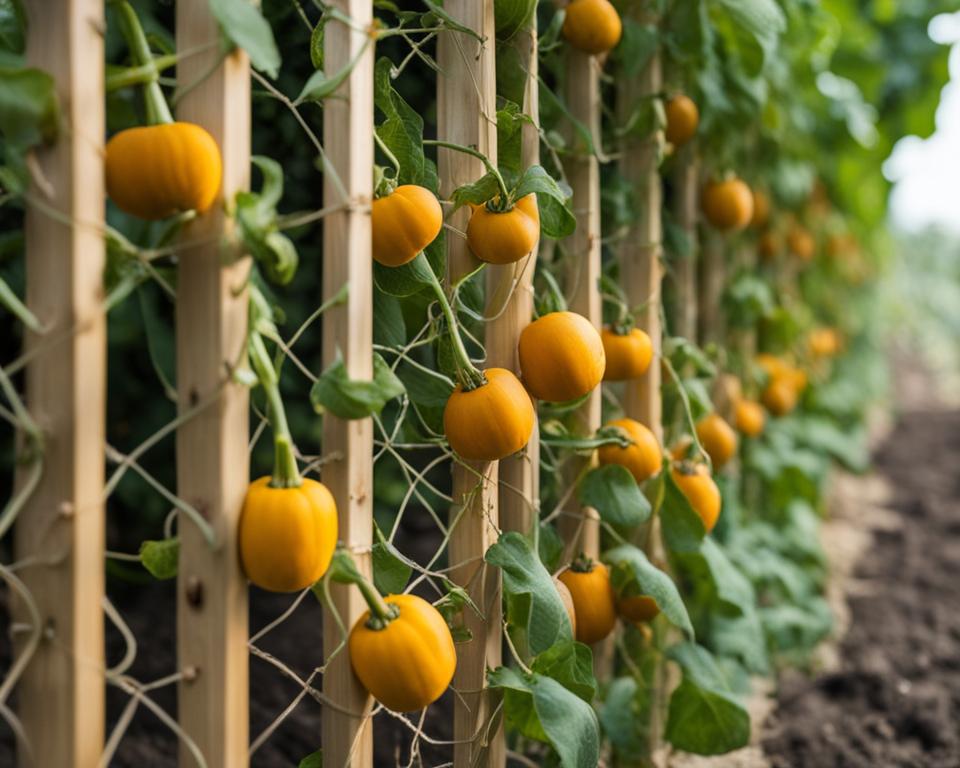
“The perfect trellis merges form with function, turning your garden into a vertical showcase of butternut splendor.” – Dedicated Gardener
Your trellis is now ready to support your butternut squashes as they reach for the skies. Happy gardening!
Planting Tips for Vertical Butternut Squash Gardens
Embarking on the vertical gardening journey with butternut squash is an exciting endeavor, and we’re thrilled to provide you with planting tips for butternut squash that will enhance the success of your vertical garden. This section will dig into the critical steps of soil preparation, seeding, and spacing techniques, ensuring that your garden is poised for optimal growth and a bountiful yield. As always, our recommendations are peppered with vertical gardening planting techniques, tailored to nurturing these vining beauties in an upward trajectory.
Soil Preparation is the cornerstone for any successful garden, and it’s no different when it comes to butternut squash. For vertical gardens, we must start with rich, well-draining soil. Incorporate plenty of organic matter—such as compost or well-rotted manure—to give your plants a nutrient-packed foundation.
Spacing Your Butternut Squash is critical in a vertical setting. Since you’ll be training the vines upwards, you can afford to space the plants slightly closer than you would in a traditional garden bed. Aim for planting your squash seeds or seedlings about 18-24 inches apart, which allows for adequate air circulation and ease of access when it comes time to train and harvest your squash.
Always account for the mature size of your plants and their need for space to climb as they grow. Overcrowding can hinder growth and promote disease.
When it comes to Timing Your Planting, ensure you’re sowing seeds after the last frost date in your area, as butternut squash thrives in warm soil. If you’re starting with seedlings, harden them off first by gradually introducing them to outdoor conditions over a week before planting.
| Action | Benefit | Recommended Timeframe |
|---|---|---|
| Soil Enrichment | Promotes strong root development | 1-2 weeks before planting |
| Spacing | Optimizes air circulation and plant health | At planting |
| Timing | Protects against frost damage | Post last frost date |
To truly capitalize on these planting techniques, let’s familiarize ourselves with some additional considerations:
- Maintaining soil moisture is essential, but avoid waterlogging which can stunt growth or promote root diseases.
- Choose a location that receives ample sunlight—ideally 6 to 8 hours a day—for the best fruit production.
- Practicing crop rotation by not planting butternut squash or other cucurbits in the same spot as the previous year helps prevent disease buildup.
Ultimately, these planting tips for butternut squash in vertical gardens are designed to create a lush, upward-growing oasis that maximizes yield and brings joy to every gardening enthusiast. So, go on, get your hands dirty and let’s lift your gardening dreams to new heights!
Best Practices for Training Butternut Squash to Climb
Gardening enthusiasts keen on vertical cultivation, let’s dive into the essentials of training butternut squash to climb. This practice is pivotal in vertical gardening training techniques, guiding the tendrils of your squash skyward for a better harvest and ease of care. We’ll focus on securing the vines and the art of pruning for optimized vertical growth—two fundamental techniques to get the most out of your space and your squash.
Securing and Supporting Growth
To begin our ascent, securing butternut squash vines is a gentle process that requires an attentive touch. As these vines climb, they require sturdy supports. We recommend implementing trellises, stakes, or strong netting designed to hold the weight of the squash as they grow. The right support will also help with air circulation and sun exposure, ensuring plant health and productivity.
- Ties: When attaching vines to your trellis, use soft materials like twine or cloth strips. These ensure that the plant is secured without cutting into the vine as it thickens.
- Clips: You can also opt for specialized garden clips that embrace the vines tenderly, supporting them without causing harm.
- Placement: Secure vines at regular intervals, carefully guiding them along the support structures without wrapping them too tightly.
Remember, securing techniques should not just prevent your plants from falling but also encourage them to grow upwards and make future harvesting much easier.
We weave our passion into the trellis, securing our squash vines to rise above the earth, as we anchor our aspirations in their climbing tendrils.
Pruning for Optimal Vertical Growth
Pruning is not just about shaping; it’s an essential practice in optimizing butternut squash growth. The aim here is twofold: to encourage the plant’s energy towards producing larger fruits and to maintain open airways which help prevent disease. Here’s how we do it:
- Identify the main vine and remove any secondary vines that emerge from the base to focus the plant’s energy.
- Trimming the leaves near the bottom of the main vine can help to increase airflow and reduce moisture-related diseases.
- As the plant extends upwards, selectively prune to allow the plant to invest more in fruit production.
| Pruning Stage | Objective | Action |
|---|---|---|
| Early Growth | Direct Energy | Remove secondary vines |
| Mid-Growth | Improve Airflow | Trim bottom leaves |
| Late Growth | Boost Fruit Size | Selectively prune for fruiting |
These pruning for vertical gardening tactics contribute to a sculpted, productive plant that not only looks good but also bears the fruits of your labor—literally. Regularly pruning your plants not only encourages them to grow upwards but promotes healthier, more manageable growth.
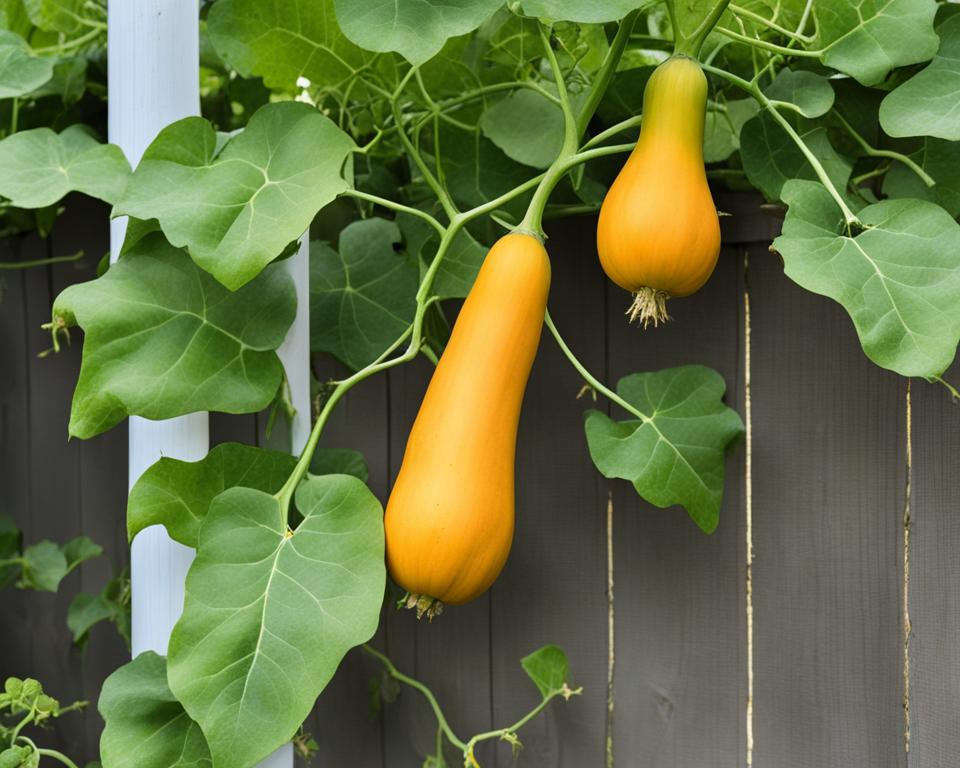
In summary, by securing and pruning your butternut squash, you optimize its ascending journey. With these vertical gardening training techniques, you’re all set to watch your vines climb high, delivering a rewarding harvest set against a backdrop of foliage that sings to the skies.
Irrigation Strategies for Vertical Vegetable Gardening
When it comes to nurturing our vertical vegetable gardens, efficient watering systems play a crucial role. The right irrigation for vertical gardens ensures evenly distributed moisture essential for healthy plant growth, particularly in the unique setting of vertical vegetable gardening watering. Let’s explore the best practices to sustain our thriving butternut squash without the risk of overwatering or fostering unwelcome diseases.
Vertical gardening presents unique challenges, especially in watering. We aim to strike the perfect balance by delivering water directly to the roots while minimizing wet foliage that can invite pathogens. So, how do we accomplish this ideal in our gardens?
- Drip Irrigation Systems: An incredibly efficient method that delivers water directly to the base of each plant, reducing water waste and the spread of leaf diseases.
- Soaker Hoses: These can be woven through the garden to provide a slow, steady soaking, allowing the water to penetrate deeply into the soil.
- Micro-Sprinkler Systems: These target water distribution more precisely than traditional sprinklers and can be adjusted to the specific needs of your vertical setup.
- Automated Timers: These can be paired with your irrigation system to provide water at the most beneficial times, often early morning or late evening to reduce evaporation loss.
Consider the size and design of your vertical vegetable gardening setup when selecting an irrigation system. The goal is to customize the irrigation to fit the needs of both your plants and your schedule.
Good irrigation practices underpin the health and productivity of our vertical garden oasis, creating a dance of droplets that nurture our butternut squashes from soil to sky.
Comparative Advantages of Irrigation Systems
Each vertical gardening watering method has its unique benefits. To help you decide which irrigation system will best suit your garden’s needs, we have prepared a detailed comparison:
| System Type | Water Efficiency | Disease Prevention | Root Saturation | Installation Complexity |
|---|---|---|---|---|
| Drip Irrigation | High | Excellent | Deep | Moderate |
| Soaker Hoses | Medium to High | Good | Variable | Low |
| Micro-Sprinklers | Medium | Good | Surface to Medium | Moderate |
| Automated Timers | Varies with System | Varies with System | Varies with System | Varies with System |
While drip irrigation systems are often the gold standard for their efficiency and effectiveness in disease prevention, the right choice for you will depend on your specific garden context and constraints.
- Monitor Moisture Levels: No matter the system you choose, always keep a close eye on the soil moisture level to ensure your vertical garden is neither too dry nor too soggy.
- Mulching Practices: Combine your watering strategy with a layer of mulch to help retain moisture and reduce the frequency of irrigation needed.
Our commitment to sustainable watering practices not only conserves water but also supports the vitality of our vertical gardens. With these strategies, your vertical vegetable gardening watering routine can nourish your butternut squashes through the driest spells, ensuring a verdant garden is always in reach.
Embracing these irrigation strategies, we can look forward to lush, productive vertical gardens. Remember, the foundation of a bountiful garden lies in the water it drinks—so let’s raise our glasses to efficient watering practices that bring life to our butternut squash and joy to our gardening hearts.
Pest Management and Disease Prevention in Butternut Squash Vertical Gardens
In cultivating our vertical gardens, we must prioritize the health of our crops. Butternut squash, while resplendent in vertical arrangements, encounters various threats in the form of pests and diseases. Comprehending strategies for pest management in vertical gardening and butternut squash disease prevention is therefore essential. These methods are not just about thwarting the adversaries; they enhance the overall resilience of our squash plants.
Organic Pest Control Methods
Adhering to organic principles, we embrace natural disease prevention for butternut squash, ensuring that our gardens flourish while maintaining an ecological balance. Our approach to pest management in vertical gardening underscores safety, sustainability, and respect for the environment.
- Companion Planting: Certain plants, when grown alongside butternut squash, can naturally repel pests. For example, marigolds deter beetles and nasturtiums ward off aphids.
- Manual Removal: Regular inspections allow us to catch pests early and remove them by hand before infestations become severe.
- Neem Oil: As a versatile organic solution, neem oil effectively mitigates a broad spectrum of pests and fungal diseases.
- Insect Traps: Sticky traps and pheromone traps can significantly reduce pest populations without the need for chemical interventions.
Moreover, nurturing a population of beneficial insects, such as ladybugs and predatory wasps, contributes to balancing the ecosystem and reducing the reliance on interventions.
We believe in the power of nature to protect our vertical gardens. By harnessing organic strategies, we foster a habitat where butternut squashes can thrive without undue interference from pests and diseases.
Creating a table of common pests and organic remedies offers a clear guide for maintaining a healthy vertical garden:
| Common Pest | Organic Remedy | Preventive Measure |
|---|---|---|
| Squash Bugs | Neem Oil Sprays | Companion Planting |
| Squash Vine Borers | Beneficial Nematodes | Foil Collars around Stems |
| Powdery Mildew | Baking Soda Solutions | Adequate Spacing for Air Circulation |
Implementing these organic methods not only protects our butternut squash from pests and diseases but equally spares us from the residues of synthetic pesticides, which ultimately benefits both our health and the environment.
As we refine our approaches to pest management in vertical gardening, we join a community of gardeners who value sustainability as highly as yield. With these principles in mind, we easily number among those who have printed the number “10” on the banner of butternut squash disease prevention—celebrating the tenacity it requires to grow hearty squashes organically.
- Early Detection: Keep a watchful eye for any signs of pests or disease, and act promptly.
- Regular Maintenance: Clear away debris and spent foliage to minimize hiding places for pests.
- Proper Hydration: Ensure a consistent watering schedule to prevent stress and disease.
At the end of the day, diligent adherence to these organic pest control methods elevates our vertical gardens, yielding sumptuous butternut squashes that are as resilient as they are delicious.
Maximizing Yield with Vertical Gardening Techniques
As we delve deeper into the world of vertical gardens, our objective is clear—maximizing yield in vertical gardens. It’s an exciting challenge that calls for a strategic blend of expertise, timing, and nurture. Whether you’re an urban grower or a hobbyist seeking extraordinary outputs from limited spaces, the following techniques are designed to turbocharge your harvest.
Advanced Nutrient Management
The key to a bountiful harvest lies not just in how high your butternut squash climbs, but also in how well it’s fed. Proper fertilization is tantamount to maximizing yields, and we’ve honed in on the essentials of providing balanced nutrients at critical growth stages.
- Start with a Soil Test: Before planting, we determine the nutrient profile of our soil to make informed fertilizer choices.
- Timed Fertilizer Application: Implementing a schedule for fertilizing dovetails with the plant’s growth stages, providing an ample boost when needed.
- Compost and Organic Matter: We enrich the soil consistently with compost to maintain a rich nutrient bed throughout the season.
Water Wisdom for Vertical Gardens
Our experience confirms that water management is just as vital for raising yields as any other factor. In vertical gardens where drainage happens swiftly, retaining optimal moisture without overwatering can be a thin line to walk. Here’s our approach:
- Drip Irrigation: It keeps roots moist and leaves dry, reducing disease risk while ensuring each plant gets just what it needs.
- Monitoring: We keep a regular check on soil moisture using probes or by simple tactile inspection. It’s vital not to let the roots dry out or become waterlogged.
Optimizing Butternut Squash Growing Conditions
Butternut squash thrives under certain conditions, and our goal is to create an ideal micro-environment for our vertical gardening cohort. This means maximizing sunlight, enhancing pollination, and managing temperature. We tackle this through:
Strategic placement of our vertical gardens to catch the morning sun, which is less harsh yet warm enough to promote flowering and fruiting.
Additionally, we plant flowers to attract pollinators or, sometimes, undertake hand pollination, ensuring no butternut flower goes unvisited. Furthermore, on especially hot days, we provide a light shade to prevent heat stress.
Implementing vertical gardening techniques for higher yields includes a judicious approach to pruning. We limit our plants to a single vine and prune off secondary shoots that compete for nutrients. This encourages the plant to focus its energy on producing and sustaining larger, more nutritious fruits. Here’s a quick guide on how and when to make the cut:
| Prune Stage | Objective | Timing |
|---|---|---|
| Main Vines | Direct energy to fruiting | Start when vine is 2 feet long |
| Secondary Vines | Minimize energy dispersion | Upon appearance |
| Low Hanging Leaves | Improve air circulation | Mid-season |
Remember, moderating the pace of growth is essential. While we encourage our vertical vines to climb heavenwards, we also guide them gently to ensure a pace that doesn’t stress the plant.
Finally, our vertical gardening aspirations glow brightly when we speak of routine plant care. Like a well-oiled machine, we stay on top of pest and disease checks, ensuring nothing falls through the cracks. We adhere strictly to an organic routine—whose backbone is companion planting, neem oil, and beneficial insects—that strengthens our squash against invaders and keeps them climbing to success.
By embracing these vertical gardening techniques for maximizing yield, our butternut squash vertical gardens do more than ascend—they triumph, crowning us with the fruits of persistence and the joy of abundance. And under our watchful care, they deliver not just yields, but a spectacle of vertical vitality.
Conclusion: Harvesting Success in Your Vertical Garden
As we reflect on the upward journey of our vertical gardens, it’s with a deep sense of accomplishment that we look at the flourishing butternut squashes—the emblem of our gardening dedication. The experience of harvesting vertical garden success is immensely gratifying, and we’re eager to share the bounty of knowledge that comes from achieving remarkable vertical gardening outcomes.
Every butternut squash harvested is a testament to the elements of care, innovation, and patience woven through the fabric of our vertical gardens.
We’ve discovered that the vertical approach goes beyond just saving space—it’s about amplifying the potential of every square inch of our growing area. This isn’t just agriculture; it’s a vertical renaissance that reshapes our landscapes and our expectations of what can be achieved in untraditional gardening spaces.
By now, we trust that the insights provided will serve as stepping stones on your path to cultivating butternut squash in ways that ascend toward the skies. But before we part ways, let’s consider a table that encapsulates the fruits of our labor.
| Garden Aspect | Vertical Approach | Outcome |
|---|---|---|
| Space Utilization | Vertical structures | Expanded growing area, increased yield |
| Disease Management | Improved air circulation | Healthier plants, reduced disease incidence |
| Pest Control | Elevated crops | Less pest damage, cleaner harvests |
| Harvest Experience | Accessible fruits | More enjoyable, less labor-intensive |
| Environmental Impact | Efficient resource use | Sustainability, lower carbon footprint |
Our endeavors in the garden—marked by early mornings, methodical care, and the joyous triumphs over climbing tendrils—have been nothing short of a labor of love. And love is precisely what we have instilled into our vertical landscapes, ensuring that when the time comes, the harvest not only signifies the end of a growth cycle but heralds a beginning for inventive and sustainable approaches to urban agriculture.
We find ourselves not at the end, but at a new, verdant beginning where we’re equipped to plant higher aspirations and reap more plentiful harvests. Together, we continue to learn, to adapt, and to grow—a community united in our vertical ventures. Our advice to you? Embrace the vertical, nurture it, and watch your garden—and your successes—soar.
Empowering Your Green Space: The Vertical Garden Revolution
In the world of gardening, the concept of ‘growing up’ has taken root with inspiring impact. As we’ve explored in this article, vertical gardening, especially with a focus on butternut squash, challenges traditional horticulture methods and introduces space-saving solutions bursting with potential. We’ve guided you through setting the stage for a skyward-bound garden, elucidating how to navigate the avenues of space, light, and care that tall tales of gardening are made of.
Our collective efforts shine light on maximizing limited urban spaces, enhancing the vibrance of the concrete jungles we reside in. Applying our extensive knowledge to erecting trellises and patient training of butternut squash vines, we’ve reinvented unclaimed vertical territories into lavish green enclaves. We’ve discussed the importance of variety selection, best practices in planting, and critical care strategies—each elevating us to reap the most robust yields while cradling the fragile balance of our ecosystems. Embracing such practices promotes a sustainable future, where local, bountiful harvests are not a luxury but a standard.
Together, we stand emboldened to craft gardens that defy gravity, ensuring that each butternut squash harvested from our vertical gardens celebrates ingenuity and perseverance. This article not only intends to seed knowledge but to harvest success in every vertical patch we cultivate. Let us take pride in our collective green thumb achievements as we cultivate not just crops, but also creativity, community, and care for our shared environment—an endeavor that flourishes from the ground up.
FAQ
What are the benefits of vertical gardening with butternut squash?
Vertical gardening can increase yield, save space, enhance air circulation, provide better sun exposure, reduce pest and disease issues, and make harvesting easier.
How do you select the right variety of butternut squash for a vertical garden?
When choosing a butternut squash variety for a vertical garden, consider factors such as the mature size of the squash, the weight of the fruits, and the growth habit of the plant. Compact and bush-type varieties or those breeding specifically for vertical growth are often the best choices.
What materials are recommended for constructing a butternut squash trellis?
Use durable materials that can support the weight of mature butternut squash, such as wooden posts, sturdy metal frames, or thick plastic netting. Ensure that the materials are weather-resistant and strong enough to last through the growing season.
Can you provide some DIY trellis design ideas for butternut squash?
Absolutely, you can create A-frames, arches, or even use cattle panels bent into arches. Vertical wooden lattices or repurposed items like old cribs or pallets can also be utilized as a foundation for your butternut squash vines.
What are the best practices for planting butternut squash in a vertical garden?
Ensure rich, well-draining soil, space your hills or rows according to the variety’s requirements, and plant seeds after the danger of frost has passed. Use a sturdy trellis and train the vines as they grow for optimal vertical growth.
How do you train butternut squash vines to climb?
Gently tie the vines to the trellis using soft materials like cloth strips or plant ties. As the plants grow, continue securing them to the trellis at regular intervals. Encourage lateral growth and increased fruiting by topping the plants when they reach the desired height.
What are the best pruning techniques for optimizing vertical growth in butternut squash?
Prune off the lower leaves to encourage air circulation and reduce disease risk. Trim secondary vines that may sap energy from fruit production. Focus the plant’s energy on the main vine and a few strong lateral branches for best fruit development.
What watering practices are recommended for vertical butternut squash gardens?
Water at the base of the plants to keep leaves dry and reduce disease risk, and provide deep, infrequent waterings that encourage strong root growth. Drip irrigation or a soaker hose can be beneficial for consistent moisture without over-watering.
How can I manage pests and diseases in my vertical butternut squash garden organically?
Use physical barriers like nets or row covers to protect young plants, encourage beneficial insects by planting compatible flowers, and apply neem oil or insecticidal soaps to manage pests. Rotate crops and sanitize tools to prevent disease spread.
What techniques can increase the yield of my vertically grown butternut squash?
Regularly check for pests and diseases, maintain consistent moisture, provide support for developing fruits if necessary, fertilize appropriately, and prune to encourage energy focus on squash production. By following these practices, you can enhance the productivity of your vertical garden.