
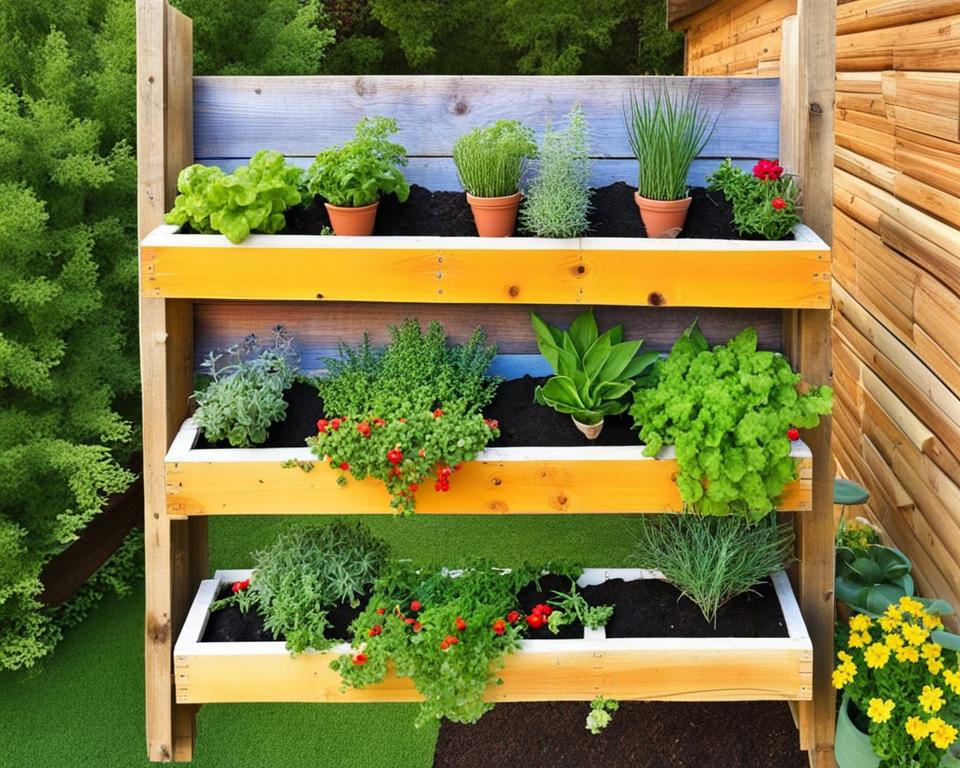
Welcome to our step-by-step guide where we’ll help you transform simple pallets into thriving vertical gardens. As space becomes a premium, particularly in urban areas, pallet gardening vertical has emerged as a creative and sustainable solution for greening up your living space. We’re here to share our passion and tips for vertical gardening with pallets, making it perfectly clear that no matter your skill level, you’ve got this.
Whether you’re an experienced green thumb or a beginner looking to engage in a rewarding DIY pallet garden project, our guide is tailored to meet your needs. We’re excited to dive into the world of pallet garden ideas, where functionality meets beauty in the realm of vertical greening. Let’s turn that vertical dream into a green reality!
Key Takeaways
- Discover the essentials of starting your pallet gardening journey.
- Learn how vertical gardens save space and beautify urban dwellings.
- Gain confidence with our user-friendly advice on DIY vertical gardening.
- Find inspiration with a variety of pallet garden ideas for any space.
- Embrace sustainability with our planet-friendly gardening tips.
Understanding Pallet Gardening Vertical
When we talk about pallet gardening vertical, we’re describing the creative repurposing of wood pallets into efficient, space-saving gardens. It’s an approach that’s gaining popularity among urban gardeners and sustainability enthusiasts alike, especially when space is at a premium. We believe that understanding the essence of how to make a vertical garden with pallets will not only enhance your gardening skills but also inspire you to innovate within your green spaces, no matter how limited they may be.
Essentially, a vertical pallet garden makes use of the horizontal slat structure of a pallet to support plants in a vertical position. This design is not only an excellent space saver but also a remarkable display of greenery that can be attached to walls, hung from balconies, or even free-standing.
Let’s delve into the historical roots to understand the trend. While pallets have been used in shipping and storage for decades, their reincarnation as garden fixtures is relatively new. Resourceful gardeners recognized the potential of these wooden platforms as a framework for growing plants upwards instead of outwards—ushering in a new wave of vertical pallet garden design.
So, why choose pallet gardening for your vertical aspirations? We’ve laid out a few compelling reasons:
- **Space Efficiency**: Especially beneficial for city dwellers with balconies or small patios.
- **Cost-Effective**: Wood pallets can often be sourced for free or at a minimal cost.
- **Eco-Friendly**: Repurposing pallets contributes to waste reduction and sustainability.
- **Aesthetic Appeal**: A pallet garden adds a charming rustic touch to any space.
The constriction of urban living spaces has propelled the practicality of vertical gardens to the forefront of urban gardening. Here’s a closer look:
| Benefit | Description |
|---|---|
| Maximizing Vertical Space | Makes use of upward space that is otherwise underutilized, providing an area for plants to thrive. |
| Adaptability | Pallet gardens can be tailored to fit any space with ease, lending themselves to a diverse range of planting projects. |
| Creative Freedom | The simple structure of a pallet serves as a canvas for gardeners to express their creativity. |
As we continue to witness the evolution of pallets from basic shipping platforms to intricate garden structures, it’s evident that these wooden frameworks have carved out a niche in the world of urban agriculture and sustainable living.
In our journey to vertical pallet garden design, expanding your living space with greenery is not just about planting; it’s about imagining and creating ecosystems where there were none. So when we consider how to make a vertical garden with pallets, we’re actively participating in reshaping the narrative of urban gardening. It’s about connecting with nature and rediscovering the joy of nurturing growth in our constricted personal environments.
A vertical garden with pallets is just the beginning. It’s a foundation for green exploration, and we’re thrilled to embark on this journey with you.
Choosing the Right Pallet for Your Vertical Garden
Starting your journey with pallet gardening for small spaces requires that we first focus on the most fundamental step: selecting safe pallets for garden use. Opting for the right pallet is crucial in ensuring that your verdant creation is not only beautiful but also safe for you and the environment.
Finding Safe Pallets for Garden Use
Not all pallets are created equal, especially when it concerns their suitability for your pallet garden DIY tutorial. Here are a few pointers on what to look for:
- HT Stamp: Look for a pallet marked with ‘HT,’ which indicates it has been heat-treated, not chemically treated which is ideal for gardening.
- Avoid MB: Pallets stamped with ‘MB’ have been treated with methyl bromide—a toxic pesticide—and should not be used.
- Check For Cleanliness: A good pallet is devoid of spills, stains, or odors that could harm your plants.
Let’s break down the symbols you’ll encounter on pallets:
| Symbol | Meaning | Gardening Suitability |
|---|---|---|
| HT | Heat Treated | Safe |
| MB | Methyl Bromide Treated | Not Safe |
| DB | Debarked | Generally Safe |
| EUR/EPAL | European Pallet Association Logo | Check Other Markings |
| P | Pine (Softwood) | Safe, If HT |
By understanding these codes, you can ensure you select a pallet that isn’t carrying harmful substances into your garden.
Preparing Your Pallet
Once you’ve sourced your safe pallet, it’s time to lay the groundwork for your garden. Preparing pallets for gardening involves a few essential steps to ready them for planting:
- Cleaning: Start by giving your pallet a thorough scrub to remove any dirt or grime. A simple solution of soap and water will do the trick.
- Sanding: Smoothen rough areas to prevent splinters and injuries. Sanding down your pallet makes it safer to handle and more aesthetically pleasing.
- Optional Sealing or Painting: Protect your pallet from the elements with non-toxic paint or sealant, especially if it will be exposed to the elements. This step is optional but can extend the life and look of your pallet garden.
Safety is paramount when handling wood, so always wear gloves and protective gear to shield yourself from potential hazards.
We want our vertical gardens not just to flourish, but to do so safely and sustainably, setting an example for responsible gardening practices.
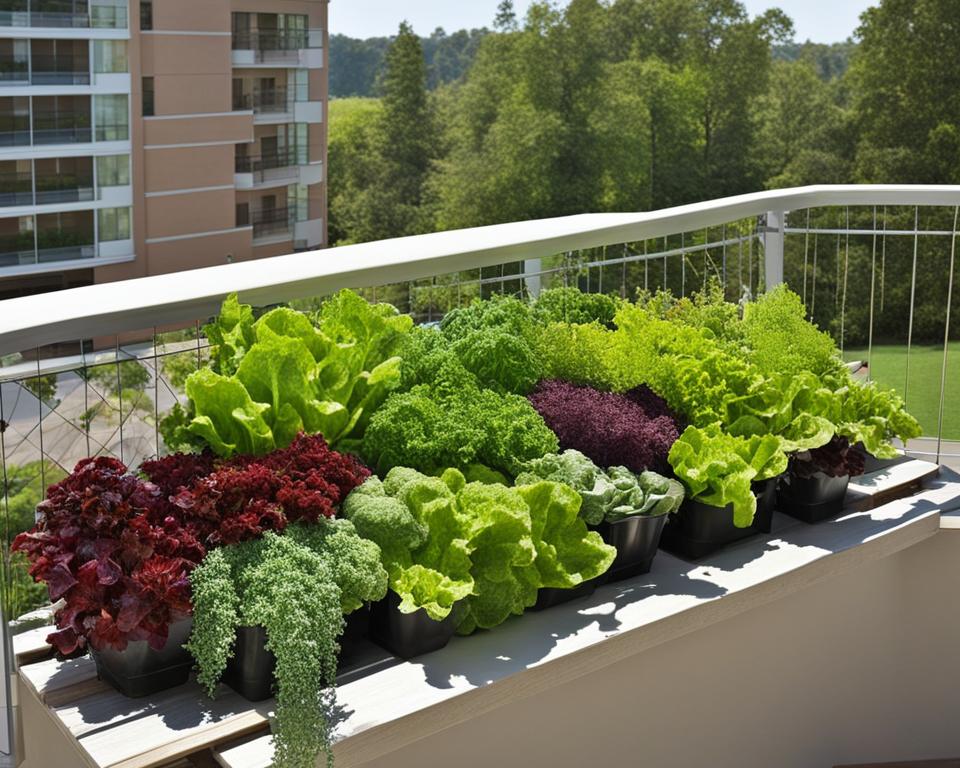
Before we delve into the particulars of arranging luscious plant beds and flirtatious floral displays, we must consider the foundational elements of our canvas—the humble pallet. Here’s how to ensure your vertical garden isn’t just possible but also practical and pulsating with life.
- Space and Context: Measure twice, plant once. Knowing the exact dimensions and the orientation of your space is vital. Does it receive ample sunlight or is it shaded?
- Aesthetic Preferences: Should your garden be a subdued, natural wood finish or a burst of color against a cityscape?
- Choice of Plants: Match your plant selections to your climate, space, and sunlight availability. The right plant in the right place is a dictum we hold dear.
| Design Principle | Details | Considerations |
|---|---|---|
| Space Utilization | Vertical pallet gardens maximize upward space. | Height restrictions, weight-bearing capacity of walls or balconies. |
| Sunlight Exposure | Plants need light; orient the pallet for maximal light. | Shadow patterns, movements of the sun, seasonality. |
| Aesthetic Integration | Design should complement its surroundings. | Color schemes, architectural style, personal taste. |
| Plant Selection | Choose plants that thrive in vertical setups. | Growth habits, root systems, companion planting. |
Your vertical garden should also resonate with the melody of your personal style while hitting the high notes of practical gardening. Below we share a tapestry of design variations to suit diverse tastes and templates:
- For the minimalist urbanite, a sleek, geometric arrangement of succulents might align with a clean and polished decor aesthetic.
- The cottage-core enthusiast may prefer a wildflower and herb medley, creating a haven for pollinators and a source for culinary inspiration.
- The pragmatist grows vertically efficient edibles: cherry tomatoes, strawberries, and greens that capitalize on vertical space and bear bountiful harvests.
Our mantra for vertical pallet garden design is to sync harmony with utility—allowing our green haven to be as functional as it is ethereal.
In the end, a vertical garden crafted from pallets is not just about optimization of space, but also a statement of ingenuity and a testament to human creativity. As we press on, let these basics serve as cornerstones to a garden that elevates not just plants, but spirits too. Illuminate your abode with plant life, and watch a humble pallet become a bastion of biodiversity as you delve deeper into the world of vertical gardening with pallets.
Step-by-Step DIY Pallet Garden Tutorial
Embarking on a DIY pallet garden project is both exciting and rewarding. We’re here to guide you through creating your very own vertical oasis. First, you’ll need to gather your pallet garden tools and materials. Then, we’ll walk you through assembling a vertical pallet garden, step by step, ensuring that by the end of this pallet garden DIY tutorial, you’ll be ready to grow your green thumb.
Gathering Your Tools and Materials
The right tools and materials are the bedrock of any successful DIY project. Here’s the list we’ve compiled to get you started:
- Gloves: To keep your hands safe and clean.
- Heat-treated pallet: Remember, HT is what we’re looking for here.
- Landscape fabric: This will hold the soil in and let the water drain out.
- Staple gun and staples: For securing the landscape fabric to your pallet.
- Potting soil: A high-quality mix is vital for healthy plants.
- Plants or seeds: Choose varieties that suit your climate and sunlight availability.
- Sandpaper: To smooth any rough edges and prevent splinters.
- Watering can or hose with a spray attachment: For gentle watering of your plants.
If you’re sourcing materials, our tip is to look for upcycling opportunities—local gardening groups often share resources, and construction sites may have unwanted pallets. Just make sure they’re safe for use in gardens.
Assembling Your Vertical Pallet Garden
With tools and materials in hand, it’s time to construct your garden:
- Prepare the pallet: Clean and sand the pallet thoroughly to remove any debris and splinters.
- Attach the landscape fabric: Cut the fabric to size, leaving some excess. Staple it to the back, bottom, and sides of the pallet, creating a pocket that will hold your soil.
- Fill with soil: Stand the pallet upright and gently pack it with soil. The landscape fabric should keep it in place.
- Plant your seeds or seedlings: If starting from seeds, sprinkle them onto the surface and lightly cover with soil. For seedlings, create openings in the landscape fabric and insert the plants into the soil.
- Water your garden: Give your newly planted garden a generous drink. It’s crucial the water reaches the roots of the plants.
Referencing the image below, you can envision how your vertical garden will come together.
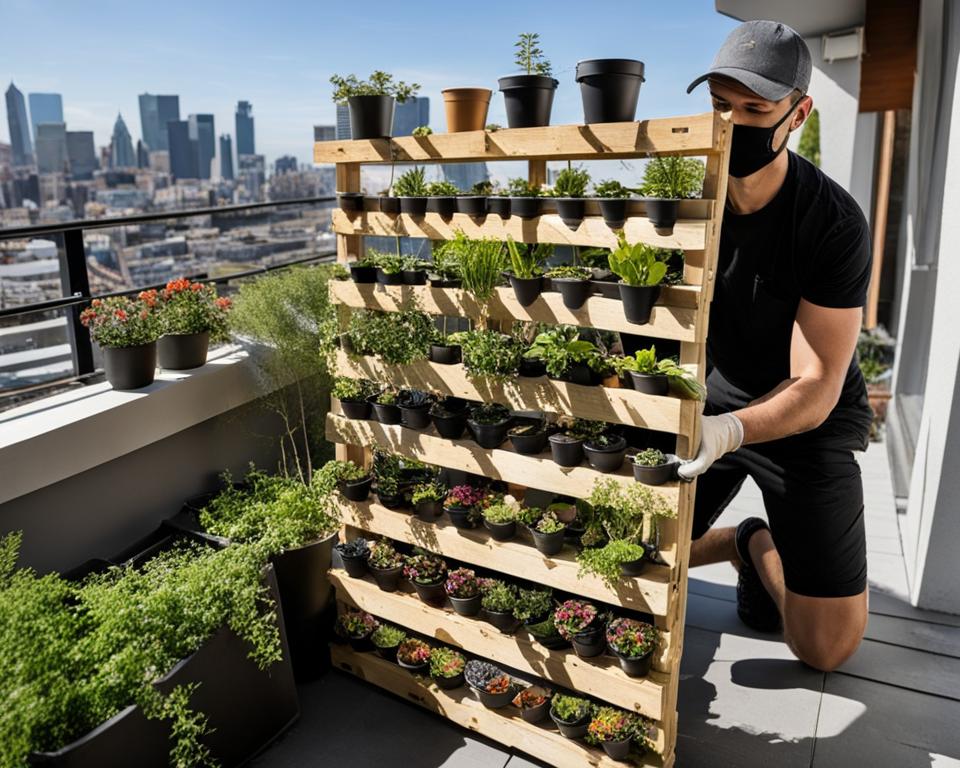
Keep in mind that it may take a few weeks for seeds to germinate or for seedlings to become established. Patience, care, and consistent watering during this time are key.
Remember, the journey of assembling a vertical pallet garden is just as enjoyable as the destination. Revel in each step, and you’ll soon witness the transformation of simple materials into a lush, vertical retreat.
Are you ready to put your green thumb to the test and get started on your pallet garden DIY tutorial? Gather your spirit and your supplies, and let’s bring that pallet garden to life!
Pallet Garden Planting Tips for Optimal Growth
We’re excited to share with you our best pallet garden planting tips to enhance the vibrancy and productivity of your vertical space. Your journey in vertical pallet garden design is about to get greener. Let’s set the stage for an abundant garden that reaches for the skies.
Selecting the right soil mix and understanding plant placement are critical facets of a flourishing vertical pallet garden. We will guide you through ensuring success from the ground up.
- Choose the Right Soil Mix: Your plants’ foundation should be rich and well-draining. Look for a potting mix that holds moisture without becoming waterlogged, as good drainage is especially important in a vertical setup.
- Potting soil: A staple for moisture retention.
- Perlite or vermiculite: For aeration and drainage.
- Compost: For added nutrients and organic matter.
- Planting Compatible Plants: Companion planting isn’t just for horizontal gardens. In your pallet, pair plants that thrive together.
- Spreading plants at the top: Allows for growth downward.
- Taller plants as anchors: Placed in spots where height is needed.
- Low maintenance plants at the bottom: Easier to care for given their accessibility.
- Understand Plant Placement: Taking into account the sun exposure and growth patterns of your plants will lead to a healthier garden.
- Sun-loving plants at the top: They’ll receive the most light.
- Shade-tolerant plants lower down: These can enjoy the filtered light below.
- Edibles within reach: For easy harvesting, keep culinary herbs and vegetables at arm’s length.
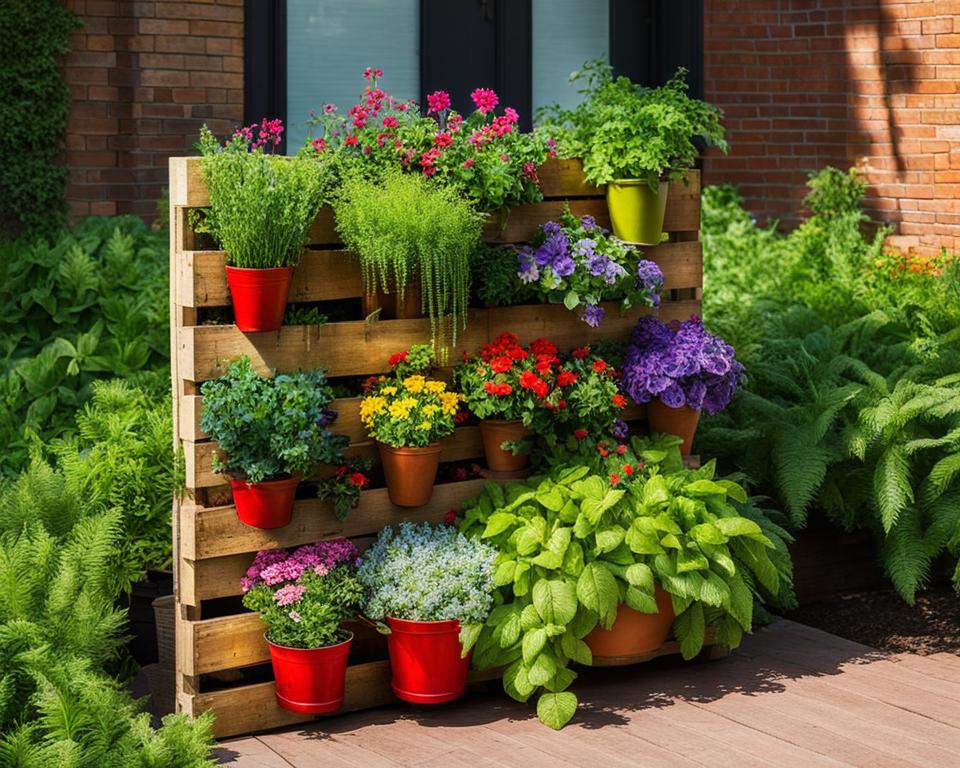
Every plant in your pallet is like an artist on a canvas – each requires the right placement to create a living masterpiece.
Another key aspect to consider for pallet garden planting tips is the watering approach. A vertical pallet garden will dry out differently than plants in the ground, so consistent monitoring and adaptable watering strategies are vital.
| Plant Type | Top/Mid/Bottom Placement | Watering Needs |
|---|---|---|
| Herbs | Mid/Bottom | Consistent moisture without overwatering |
| Succulents | Top | Less frequent watering; well-draining soil mix |
| Leafy Greens | Mid | Regular watering to prevent wilting |
| Flowering Annuals | Top/Mid | Moderate hydration with attention to bloom cycles |
Lastly, remember that the beauty of a vertical pallet garden design lies not just in its aesthetics, but also in its efficient use of space and resources. Monitor growth, rotate plants if necessary, and always be open to adjusting your strategy as your garden evolves.
Ready to bring your pallet garden to life? Keep these tips in mind, and you’re set to grow a vertical paradise that will be the envy of neighbors and friends alike. Let’s plant a garden that’s rooted in success!
Ideas for Arranging Plants in a Vertical Pallet Garden
Immerse yourself in the art of creative pallet garden ideas that merge form with function, transforming your urban space into a cascading green utopia. As we delve into the world of vertical pallet garden design, we believe that the key to an enthusiast’s heart is through the strategic arrangement of plants to maximize both visual appeal and ecological soundness.
Imagine crafting layers of lush foliage, vibrant flowers, and plump edibles that not only please the eye but beckon pollinators to your doorstep. Unlock the secrets to a visually stunning and thriving pallet garden with our thoughtful suggestions.
To breathe life into your vertical visions, consider organizing your garden into zones based on plant needs and aesthetic balance. Here are some inspired configurations to bring color, texture, and flavor to your vertical haven:
- Aromatic Herbs at Nasal Level: Imagine brushing past and being greeted by the inviting scents of basil, mint, and lavender.
- Edibles Front and Center: Grow strawberries, leafy greens, and cherry tomatoes where they can be easily monitored and harvested.
- Floral Pops of Color: Intersperse petunias, marigolds, and zinnias for bursts of color that are visually arresting from a distance.
- Shade-Loving Plants in the Lower Regions: Shelter ferns and hostas below to create a lush undergrowth.
- Pollinator Patches: Dedicate spaces for butterfly and bee attractants like wildflowers, ensuring your garden buzzes with life.
Each plant placement in your vertical garden is much like a carefully chosen brush stroke on a painter’s canvas.
We’ve included a detailed table for you to visualize these creative plant arrangement concepts:
| Zone | Plant Suggestions | Benefits |
|---|---|---|
| Nasal Height | Herbs (Rosemary, Thyme) | Aromatherapy and culinary use. |
| Eyesight Level | Edibles (Lettuce, Peppers) | Easy harvesting and monitoring for pests. |
| Bright Pops of Mid-Level | Annuals (Snapdragons, Nasturtium) | Visually striking and edible in some cases. |
| Lower Shaded Area | Shade Plants (Moss, Coleus) | Thrives in less sunshine; provides lush texture. |
| Any Accessible Zone | Pollinators (Lavender, Bee Balm) | Attracts beneficial insects; environmental contribution. |
These arrangements address a spectrum of practical considerations, from ease of access for maintenance and harvests to ensuring each plant receives the right amount of light. Moreover, they add an element of order that, when viewed as a whole, creates a rich tapestry that enhances the aesthetics of any space.
Tailoring these creative suggestions to your unique climate, taste, and space restrictions can turn the humble pallet into a dynamic centerpiece of your outdoor—or even indoor—environment. A verdant display of edibles, ornamentals, and pollinator-friendly foliage not only delights the senses but also serves as a pillar of your personal ecosystem.
Embrace these vertical pallet garden design concepts, and watch as your vertical space metamorphoses into a mosaic of greenery that’s as nourishing to the soul as it is to bees and butterflies. Here’s to growing upwards and onwards!
Maintenance and Watering Your Pallet Garden
Embarking on the adventure of maintaining a pallet garden promises a unique reward for urban horticulturists. The key to a lush and productive vertical pallet garden lies not only in its creation but also in the ongoing care it receives. Proper watering, a guardian’s watch for pests, and attuned seasonal care ensure our elevated green spaces stay vibrant and healthy.
Consistency and diligence form the twin pillars of vertical pallet garden maintenance. Considering the uniqueness of growing plants vertically, special attention must be given to watering routines, pest control, and adjusting care with the changing seasons. Let us delve into practical tips to ensure your garden flourishes.
Remember, a vertical garden is like a living tapestry, and with the right care, its beauty grows each day.
Watering Your Vertical Pallet Garden
Watering a vertical pallet garden is a balancing act that requires a more nuanced approach than flat-bed gardens due to variances in exposure to the sun and air flow, which can lead to differential drying patterns. Here’s how to keep the hydration consistent:
- Check the soil moisture at different levels regularly, as the top may dry out faster than the bottom.
- Use a watering can with a long spout for ease of reaching all plants without over-watering.
- Consider a drip irrigation system for uniform and time-saving watering.
- During high temperatures, watering in the early morning or late evening will reduce evaporation losses.
Monitoring and adjusting your watering technique based on these pointers, your plant’s needs, and the local climate is the secret to mastering the art of maintaining a pallet garden.
| Position in Pallet | Watering Frequency | Maintenance Notes |
|---|---|---|
| Top | Often | Prone to quicker drying, monitor soil moisture closely |
| Mid | Moderate | Balanced exposure; maintain consistent soil moisture |
| Bottom | Less Often | Watch for waterlogging due to run-off from above |
Pest Management
Pests may see your vertical pallet garden as an invitation, but consistent surveillance and organic intervention can keep unwanted visitors at bay. Inspect your plants regularly for signs of infestation—treat quickly with neem oil or insecticidal soap to address issues without compromising the environment.
Seasonal Care
As the seasons turn, your garden will require different care strategies. Transitioning from the growing warmth of spring to the searing sun of summer, and then to the cooling whispers of autumn before the rest of winter, each phase demands a different palette of care.
- In spring, prepare your garden for new planting and growth.
- Summer might require additional shading or watering to combat heat stress.
- Autumn is the time to clear out spent plants and perhaps introduce cool-season varieties.
- Winter’s focus should be on protecting your pallet from extreme cold and preparing for the next season.
Frequent inspections, gentle nourishment, and seasonal adjustments are the rhythms we dance to in maintaining a pallet garden. It’s about being proactive, not reactive—nurturing our vertical gardens so they, in turn, can nurture us.
- Check for loose or damaged boards and repair as needed to maintain structure integrity.
- Assess the overall health of plants and replace any that are beyond recovery.
- Clean and sanitize tools after each use to prevent the spread of disease.
- Rotate annuals seasonally for continued visual interest and soil health.
- Mulch appropriately to help conserve water and suppress weeds.
Weaving these strands of care into the fabric of your gardening routine creates a strong, resilient palette garden. And in the spirit of reinforcing growth and sustainability, let’s consider the importance of companion planting and crop rotation in a future section. Until then, we empower you with these insights: with mindful nurturing, even the most modest garden can reach splendid heights.
Benefits of Pallet Gardening in Small Spaces
With urban living often translating to compact outdoor areas, pallet gardening for small spaces has become a pivotal way to enrich limited square footage with lush greenery. Space efficiency is at the heart of pallet gardening – an ingenious fusion of utility and esthetics, turning even the snuggest of balconies into vibrant patches of verdance.
Space Efficiency with Vertical Gardening
For city dwellers or those with modest outdoor spaces, the quest for space efficiency has often led to the innovative practice of vertical gardening. By stacking upwards, pallet gardens defy the constraints of horizontal surfaces, offering ample growing area within a diminutive footprint. Thus, the vertical gardening benefits have been nothing short of transformative – inviting nature into the urban jungle while respecting its spatial limits.
- Vertical gardens use vertical space, allowing for more plants per square foot.
- Pallets are affordable and often readily available, making them a cost-effective option for tight budgets.
- They accentuate the height of any space, lending a perception of larger area.
Real-life examples of space-saving pallet gardens showcase flourishing herbs, succulents, and even small vegetables thriving against gravity’s norms.
Creative Expression Through Garden Design
Pallet gardens provide a canvas for creative expression, regardless of one’s gardening experience. With a simple structure and minimal investment, personal taste and artistic flair can take the forefront. From choosing the palette of plants to the color staining of the wood, every pallet garden is a unique reflection of its creator’s garden design expression.
We see our garden spaces not just as areas for cultivation, but also as opportunities for personal artistic outlets. Each garden tells a story, your story.
Here’s a glimpse into the varied avenues for creative pallet garden ideas:
- Thematic planting, like a pollinator-friendly selection, can create a buzzing haven for bees and butterflies, while also serving the environment.
- Utilizing a mix of textures and colors, from the silvery foliage of dusty millers to the rich purples of petunias, offers a visually dynamic display.
- Vertical gardens can also function as space dividers, making them both ornamental and functional elements in garden design.
Let’s not forget that the adaptability of pallets aids in garden design expression, as they can be modified to fit the unique contour of each space – making the most of what you have to create your own green retreat. In embracing such projects, we dip our green thumbs into a blend of form and function that resonates with our lifestyle and space constraints, all while contributing positively to our surroundings.
| Feature | Space Efficiency Advantage | Creative Design Potential |
|---|---|---|
| Compact Footprint | Maximized growing area in minimal space. | Facilitates intricate garden patterns and vertical landscapes. |
| Verticality | Upwards growth means less ground coverage needed. | Creative stacking and layering techniques become possible. |
| Adaptability | Can be placed in various locations, including walls and balconies. | Personalized approach to crafting spaces with greenery. |
| Cost-Effectiveness | More plants can grow per monetary investment. | Affordable experimentation with different garden styles. |
Embracing pallet gardening for small spaces leads us to discover the satisfaction that lies in a well-planned, sustainable corner of growth. Be it through vertical gardening benefits or through the joy of infusing a touch of our essence into our homes, pallet gardening speaks to the resourceful and the imaginative alike. So, let us pick up our pallets and embark on a journey of creation, where each slat and seedling becomes a testament to human ingenuity in the face of spatial limits.
Protecting Your Pallet Garden from Pests and Weather
As dedicated green-thumbed enthusiasts, we understand the effort you put into nurturing your pallet gardens. It’s equally important to shield your verdant oasis from the unsavory elements and critters that can compromise its vitality. Here, we’ll dive into robust strategies for protecting pallet garden sanctuaries from the voracious appetite of pallet garden pests and the sometimes harsh realities of nature’s temperament. And rest assured, our methods are eco-friendly, aligning with the earth-conscious spirit of pallet gardening.
For every garden, protection equals prevention. A seasoned approach to caring safeguards against the unforeseen and extends your garden’s seasons.
Organic Solutions to Thwart Pallet Garden Pests
In battling pests, employing organic pest control methods not only preserves the health of our plants but also protects the environment. Chemical pesticides, although sometimes thought of as a quick remedy, can harm beneficial insects and leach into the ecosystem. Instead, we champion natural allies and organic concoctions.
- Neem Oil: A time-tested favorite that acts as an antifeedant and growth regulator for pests.
- Diatomaceous Earth: Sprinkle this naturally occurring, abrasive powder to deter soft-bodied invaders.
- Companion Planting: Integrate pest-repelling plants like marigolds or lavender to keep away nuisances naturally.
- Predatory Insects: Welcome ladybugs and praying mantises, the guardians of the garden that feast on harmful bugs.
Employ these measures and watch as your pallet gardens become fortresses of foliage, free from the tyranny of destructive pests.
Weatherproofing Pallet Gardens
Weatherproofing pallet gardens requires a strategic approach, as the whimsical weather plays a crucial role in the well-being of our plants. Through proper planning and materials, our gardens can stand strong against the temperamental bouts of heat, cold, and wetness.
- Paint with Purpose: Use a non-toxic, weather-resistant paint to acts as a shield against moisture and UV rays.
- Seal the Deal: Applying a waterproof sealant can extend the life of the wood without harming the plants.
- Destination Location: Position your pallet garden in a spot that’s protected from harsh winds but still receives ample sunlight.
| Weather Challenge | Eco-Friendly Solution | Notes for Gardeners |
|---|---|---|
| High Heat | Shade Cloth | Provides UV protection during peak sunlight hours. |
| Chilling Cold | Insulating Wrap | Wrap pallets with burlap or frost cloths when temperatures drop. |
| Excessive Rain | Proper Angling | Ensure your pallet is tilted for drainage to prevent waterlogging. |
| Snow and Ice | Cover or Move | Cover with plastic sheeting or move to a sheltered area to avoid frost damage. |
Armed with these strategies, the life of your pallet garden will be gracefully extended, letting you enjoy the fruits of your labor throughout various seasons. We believe in the resolute spirit of DIY gardening and stand with you in reinforcing the sanctuary that is your pallet garden. Together, let’s cultivate resilience and bloom forth, come rain or shine.
Conclusion
As we draw to a close on our exploration of vertical gardening with pallets, we reflect on the endless possibilities this sustainable practice offers. The journey of creating a successful DIY pallet garden is rewarding and reveals the profound connection between our need for green spaces and our ingenuity in crafting them. By taking up the mantle of a pallet gardener, you step into a world where functionality and beauty coalesce seamlessly, underlined by an unwavering commitment to the environment.
It’s our hope that through this guide, you’ve found the inspiration and confidence to embark upon your own vertical gardening adventure with pallets. Such endeavors are not only a testament to human creativity but also a palpable step towards more sustainable living practices. Together, we can transform even the smallest of spaces into thriving green canvases, blooming with life, and contributing positively to our cherished planet.
We invite you to embrace this harmonious blend of aesthetics and utility, and to allow the vertical dreams of your pallet garden to rise skyward. Whether your vision is a culinary herb haven or a blossoming floral masterpiece, the path to a flourishing garden is at your fingertips. So let’s pick up our tools and let the love of gardening guide us to cultivate a space that is as kind to the earth as it is to our souls.
FAQ
What is pallet gardening vertical and why is it good for small spaces?
Pallet gardening vertical is the practice of using reclaimed wooden pallets as a structure to grow plants vertically, rather than horizontally. This method is perfect for small spaces as it allows gardeners to maximize their growing area without requiring a lot of ground space. By growing upwards, you can transform a tiny patio, balcony, or wall into a lush garden.
How do I make a vertical garden with pallets?
Creating a vertical garden with pallets involves several key steps, including selecting a heat-treated and safe pallet, preparing it by cleaning and optionally sealing it, adding landscape fabric to hold the soil, filling it with a suitable soil mix, and planting your desired plants. These gardens can be leaned against a wall or hung, depending on your space and weight considerations.
How do I ensure the pallets I use are safe for gardening?
Safety is paramount when selecting pallets for gardening. Look for pallets stamped with “HT,” which means they have been heat-treated rather than chemically treated. Avoid pallets with “MB” marking, as they’ve been treated with methyl bromide, which is toxic. Also, steer clear from pallets with an unrecognizable stamp or those that may have been exposed to contaminants.
What tools and materials do I need for a DIY pallet garden?
The basic tools and materials required for a DIY pallet garden include a wooden pallet, landscape fabric, a staple gun, gardening gloves, potting soil, sandpaper, and your choice of plants. Optionally, you might need paint or sealant if you wish to treat the wood, and mounting brackets if you intend to hang your pallet garden.
What plants grow well in a vertical pallet garden?
When choosing plants for your vertical pallet garden, look for species that don’t require deep root space and that can thrive in more confined soil. Herbs, succulents, small vegetables like lettuce and radishes, and annual flowers are all excellent choices. It’s also important to consider the sunlight requirements of your plants to ensure they’re compatible with your garden’s location.
How often should I water my pallet garden?
Watering frequency for a pallet garden depends on several factors, such as the types of plants you’ve chosen, the climate, and the location of your garden. In general, because the soil in pallet gardens can dry out quickly, you may need to water more frequently than traditional gardens—sometimes daily in hot, dry weather. Always check the soil moisture and consider using a drip irrigation system for consistency.
Can pallet gardens really offer efficient space utilization?
Absolutely! Pallet gardens are an excellent way to utilize vertical space that might otherwise go unused. By stacking plants vertically, you can grow a variety of plants in a compact area, making it an efficient solution for apartment dwellers, those with small yards, or anyone looking to add greenery to a limited space.
What creative design ideas can I implement in my pallet garden?
Get creative with your pallet garden by playing with color schemes, varying plant heights for a cascading effect, or incorporating decorative elements like fairy lights or painted patterns on the wood. You might also consider theme gardens, such as a “pizza garden” with tomatoes, basil, and oregano, or a “pollinator paradise” focused on attracting bees and butterflies with nectar-rich flowers.
How can I protect my pallet garden from harsh weather and pests?
To protect your pallet garden from weather, consider applying a water-resistant sealant to the wood and ensure your garden has adequate drainage. For pests, regular inspection and the use of organic controls like neem oil can be effective. For colder climates, you might need to wrap your pallet garden or move it to a sheltered location during extreme weather.